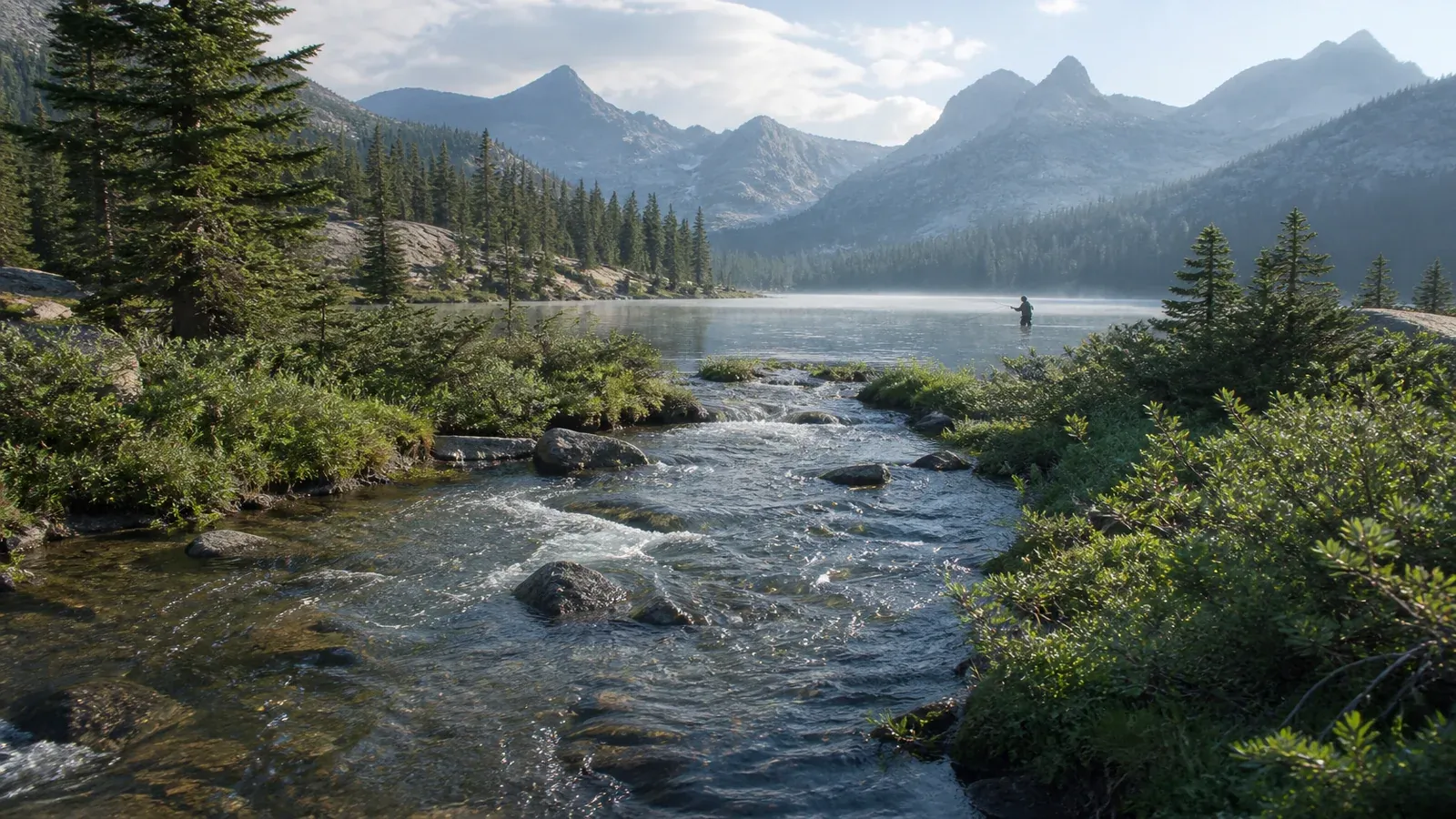
Fishing at mountain lakes draws anglers for clear water, scenic settings, and species such as trout, char, and kokanee salmon that thrive in cold, oxygen-rich environments. A lakeside cabin stay can put the shoreline within walking distance of morning and evening fishing sessions, though success depends as much on season, regulation compliance, and understanding local fish behavior as on equipment quality. This guide covers the fundamentals of mountain lake angling for travelers planning a cabin-based trip: common species, seasonal patterns, licensing and regulation basics, shore versus boat approaches, and principles of responsible catch-and-release fishing.
Common Species in Mountain Lakes
Species composition varies by region, elevation, and whether a lake is naturally occurring or stocked, but several types appear frequently across mountain lake systems in the United States:
- Rainbow trout: Widely stocked and naturally reproducing in many western and northeastern lakes. Often active near inlets where cold feeder streams enter the lake.
- Cutthroat trout: Native to many Rocky Mountain drainages; regulations may require release in certain waters to protect subspecies.
- Brook trout: Common in smaller high-elevation lakes and streams; generally smaller but often abundant in suitable habitat.
- Lake trout: Found in deeper, colder lakes; typically require different tactics and often deeper water than stream-oriented trout species.
- Kokanee salmon: Landlocked sockeye populations in some western reservoirs and natural lakes; seasonal timing matters significantly for productive angling.
State fish and wildlife agency websites typically maintain current stocking schedules, species lists, and special regulation zones for individual water bodies. These official sources are more reliable than general regional assumptions or outdated guidebooks.
Seasonal Fishing Patterns
Mountain lake fishing changes noticeably through the year, driven by water temperature, ice cover, insect hatches, and spawning behavior:
- Ice-out through late spring: Fish often feed actively as waters warm from near-freezing toward the low fifties Fahrenheit. Inlet areas and shallow bays can be productive as trout move into warming zones.
- Early to mid-summer: As surface temperatures rise, many trout species move to deeper, cooler water during midday and feed more actively near dawn and dusk. Terrestrial insect falls from overhanging vegetation can create brief surface feeding opportunities.
- Late summer: Low water in drought years may concentrate fish but also increase water temperature stress. Morning and evening fishing remains preferable; midday catch-and-release can stress fish in warm surface layers.
- Autumn: Cooling water often triggers increased feeding ahead of winter. Spawning runs in connected streams may draw fish away from open lake areas during specific windows.
- Winter: Where ice is thick and safe, ice fishing extends the season on many mountain lakes. Ice thickness, current, and spring influence safety — local bait shops and wildlife officers are primary sources for current conditions.
Our seasonal guides connect these fishing patterns to broader trip timing considerations.
Licensing and Regulations
Angling in the United States requires compliance with state-specific licensing, daily limits, gear restrictions, and seasonal closures. General principles apply nearly everywhere, but specifics differ by state and sometimes by individual lake:
- Purchase the correct resident or nonresident license for the state where you will fish, plus any required stamps or permits for specific species or waters.
- Review daily bag and possession limits, which may differ for stocked versus wild fish and can change annually.
- Check whether the lake is fly-fishing only, artificial lures only, or has motor restrictions that affect boat-based angling.
- Confirm whether catch-and-release is required in certain zones or during spawning periods.
- Understand lead tackle restrictions where applicable, particularly in waters shared with loons and other diving birds.
Regulations are enforced by state wildlife officers; ignorance of a special rule is not typically accepted as a defense. Most agencies publish free regulation booklets and searchable online databases updated each season.
Shore Fishing from a Lakeside Cabin
Staying in a lakeside cabin can simplify shore fishing logistics: rods, waders, and a tackle box remain steps from the water rather than loaded into a vehicle for each session. Productive shore approaches often include working inlet streams where cold water enters, casting along drop-offs visible from shore when water clarity allows, and focusing on dawn and dusk periods when fish move into shallower feeding zones.
Shore anglers should be mindful of private property boundaries along irregular shorelines. Even when a cabin rental includes lake access, adjacent parcels may not. When in doubt, fish from the deeded access area confirmed by the property host or use designated public access points marked on agency maps.
Boat and Float Fishing
Larger mountain lakes often reward boat access to reach structure, depth changes, and less-pressured coves. Options range from motorized boats where permitted to float tubes, pontoon boats, and kayaks rigged for trolling or still-water fly casting. Each approach requires attention to weather: afternoon wind can develop quickly on open alpine lakes, creating challenging conditions for small craft.
Life jackets, throwable flotation, and audible signaling devices are legally required on many waters and prudent on all of them. Our kayaking guide covers additional on-water safety considerations relevant to anglers using paddle craft.
Responsible Angling Practices
- Use barbless hooks or pinch barbs when practicing catch-and-release to reduce injury.
- Minimize air exposure: keep fish in water as much as possible during hook removal and photography.
- Avoid fishing in water above roughly 65°F (18°C) for cold-water species when catch-and-release survival rates decline.
- Pack out all line, bait containers, and litter — monofilament poses entanglement hazards to birds and mammals.
- Never transfer bait, fish, or water between lakes to prevent invasive species spread.
Regulations exist to preserve fish populations for future seasons; treating them as part of the experience rather than an obstacle tends to produce more sustainable fishing over the long term.
How This Guide Was Put Together
This overview reflects general angling knowledge and publicly available regulation frameworks from state fish and wildlife agencies. It is not a substitute for current official regulations, local fishing reports, or on-site guidance from licensed outfitters. Fish populations, water levels, and access conditions change — verify all licensing and rule details before your trip and adjust expectations based on current local information.