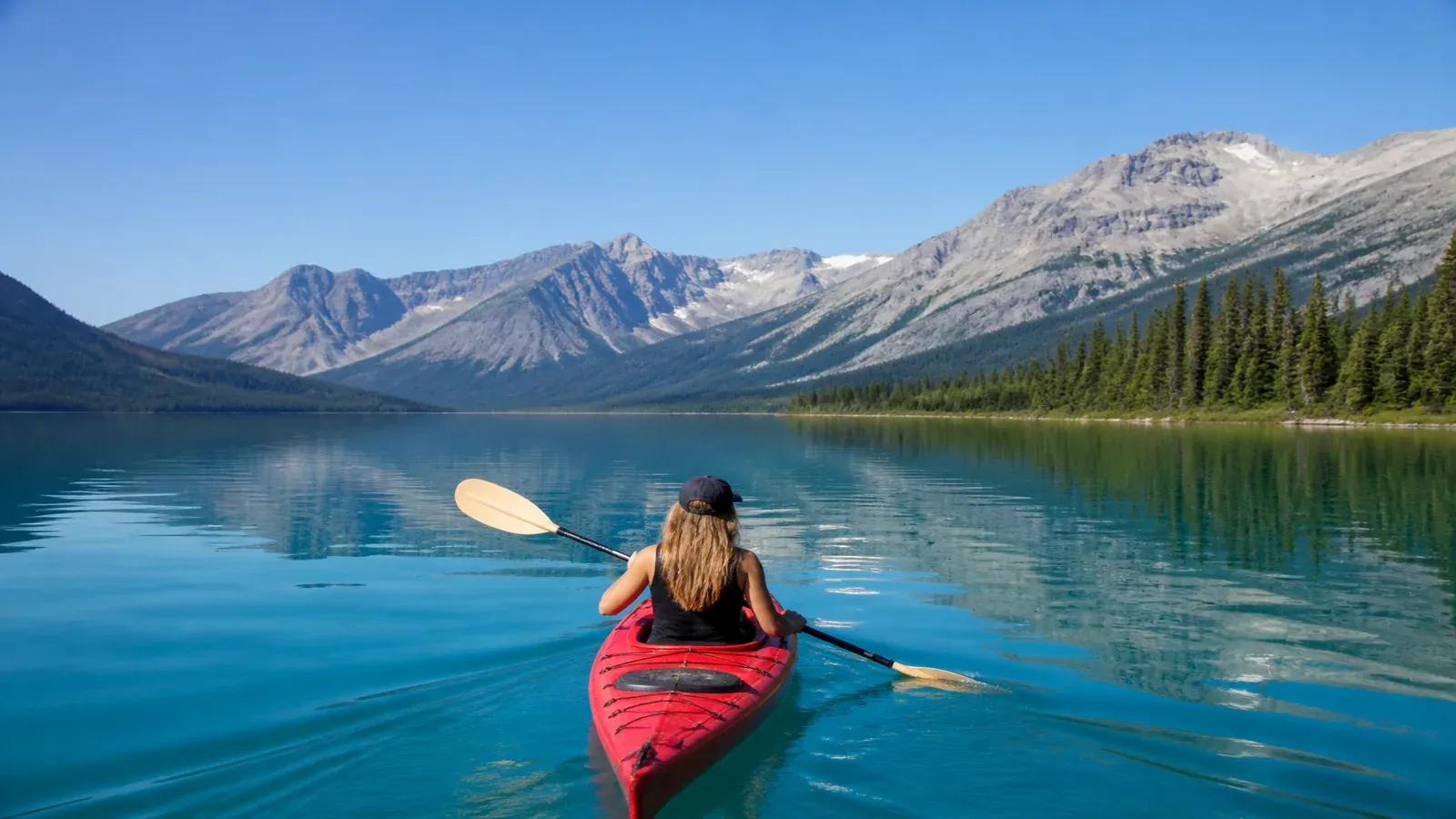
Kayaking on a mountain lake offers a perspective that shoreline hiking and driving viewpoints cannot replicate: water-level sightlines into reflected peaks, quiet approaches toward wildlife along the shore, and the meditative rhythm of paddle strokes in wind-protected coves. For travelers staying in lakeside cabins, a kayak can become the primary daily activity with minimal transport logistics. Mountain lake paddling also carries distinct safety considerations — cold water, sudden weather changes, and remote locations — that differ meaningfully from warm-weather coastal or lowland paddling. This guide covers equipment basics, safety preparation, launch logistics from cabin properties, and route planning suited to alpine flatwater environments.
Choosing a Craft for Mountain Lakes
Most mountain lake paddling happens on flatwater without significant current, which simplifies craft selection compared to river kayaking. Common options include:
- Recreational sit-inside kayaks: Stable, widely available for rent at marinas near popular lakes, and suitable for calm conditions within roughly a quarter mile of shore.
- Sit-on-top kayaks: Easier to re-enter after capsizing in theory, though cold water makes any swim serious; popular for warm lowland lakes but require the same cold-water precautions at elevation.
- Inflatable kayaks: Portable for cabin travelers arriving without roof racks; quality varies significantly — look for multiple air chambers and appropriate weight capacity for gear and paddler.
- Touring or sea kayaks: Longer hulls track better for crossing larger lakes but may be less maneuverable in tight coves and require more skill in wind.
Rental outfitters near established mountain lakes often provide personal flotation devices (PFDs), paddles, and basic safety briefings. Confirm whether delivery to cabin properties is available or whether you must pick up at a marina, which affects logistics for remote stays.
Cold-Water Safety Essentials
Mountain lake water temperatures frequently remain between 40°F and 55°F (4°C to 13°C) even in midsummer. Capsizing in water this cold can lead to cold shock response, rapid loss of dexterity, and hypothermia within minutes to an hour depending on conditions and whether a PFD is worn. General safety guidance for cold-water paddling includes:
- Always wear a properly fitted PFD — not merely carry it on board.
- Dress for the water temperature, not the air temperature: wetsuits or drysuits are appropriate on many alpine lakes even when shore weather feels warm.
- Stay closer to shore than you would on warm water, particularly when paddling alone.
- File a float plan with someone on land: intended route, departure time, and expected return.
- Carry a whistle, waterproof communication device where service exists, and spare layers in a dry bag.
Paddling alone on remote cold lakes increases risk disproportionately. When possible, paddle with a partner or remain within visible distance of other water users.
Weather and Wind on Alpine Lakes
Mountain weather shifts quickly. Clear mornings can give way to afternoon thunderstorms in many ranges between June and September, with lightning posing a serious hazard on open water. Wind often increases in the afternoon as thermal gradients develop between heated slopes and cooler lake surfaces, creating choppy conditions that challenge inexperienced paddlers and slow return times to shore.
Practical habits include checking a detailed forecast before launching, starting paddles early in the day, monitoring building cloud formations, and heading to shore at the first sign of thunder or rapidly strengthening wind. Some lakes have predictable wind patterns documented by local outfitters — asking at a marina or reading lake-specific paddling notes can inform timing.
Launching from Lakeside Cabins
Cabin-based paddlers benefit from repeated short sessions from the same launch point, but not every lakeside property provides ideal put-in conditions. Evaluate:
- Whether the shoreline is rocky, muddy, or dock-equipped for safe entry and exit.
- Whether submerged logs or shallow rocks near shore create hazards not visible from the cabin deck.
- Whether private dock use is included in the rental or shared with neighbors under specific rules.
- Whether parking and carrying distance for owned or inflatable kayaks is manageable from the cabin.
When cabin shoreline access is limited, nearby public boat ramps listed on state parks or forest service websites may offer safer, maintained launch facilities worth a short drive.
Route Planning for Different Skill Levels
Beginner-friendly approaches include staying within a protected cove, following the shoreline rather than crossing open water, and limiting initial outings to 60–90 minutes until comfort with re-entry, steering, and weather reading develops.
Intermediate paddlers may explore longer shoreline circuits, cross moderate distances to visible landmarks such as islands or inlet mouths, and combine paddling with short shore stops for photography or fishing. Our scenic views guide notes viewpoints often reachable only from water.
Advanced crossings of large open lakes require judgment about wind fetch, escort boats, and emergency landing options along distant shores. Many recreational cabin travelers never need open-lake crossings to have rewarding paddling experiences.
Wildlife and Environmental Considerations
Paddling quietly can bring encounters with waterfowl, beaver, moose along vegetated shores, and occasionally bears foraging near inlet streams. Maintaining distance protects both wildlife and paddlers — particularly with moose, which can be aggressive when approached in water or on shore. See our wildlife guide for general distance and behavior guidance.
On mountain lakes, the safest paddling days are usually the ones where you leave margin for weather, cold water, and an early return — not the ones where you push farthest from shore.
How This Guide Was Put Together
This material summarizes widely accepted flatwater paddling safety practices and cold-water recreation guidance from organizations such as the American Canoe Association and the National Weather Service, adapted for mountain lake contexts. It is educational content only — conditions on any given lake vary daily. Confirm current weather, water temperature, and local boating regulations before launching, and consider professional instruction if you are new to kayaking in cold or remote environments.