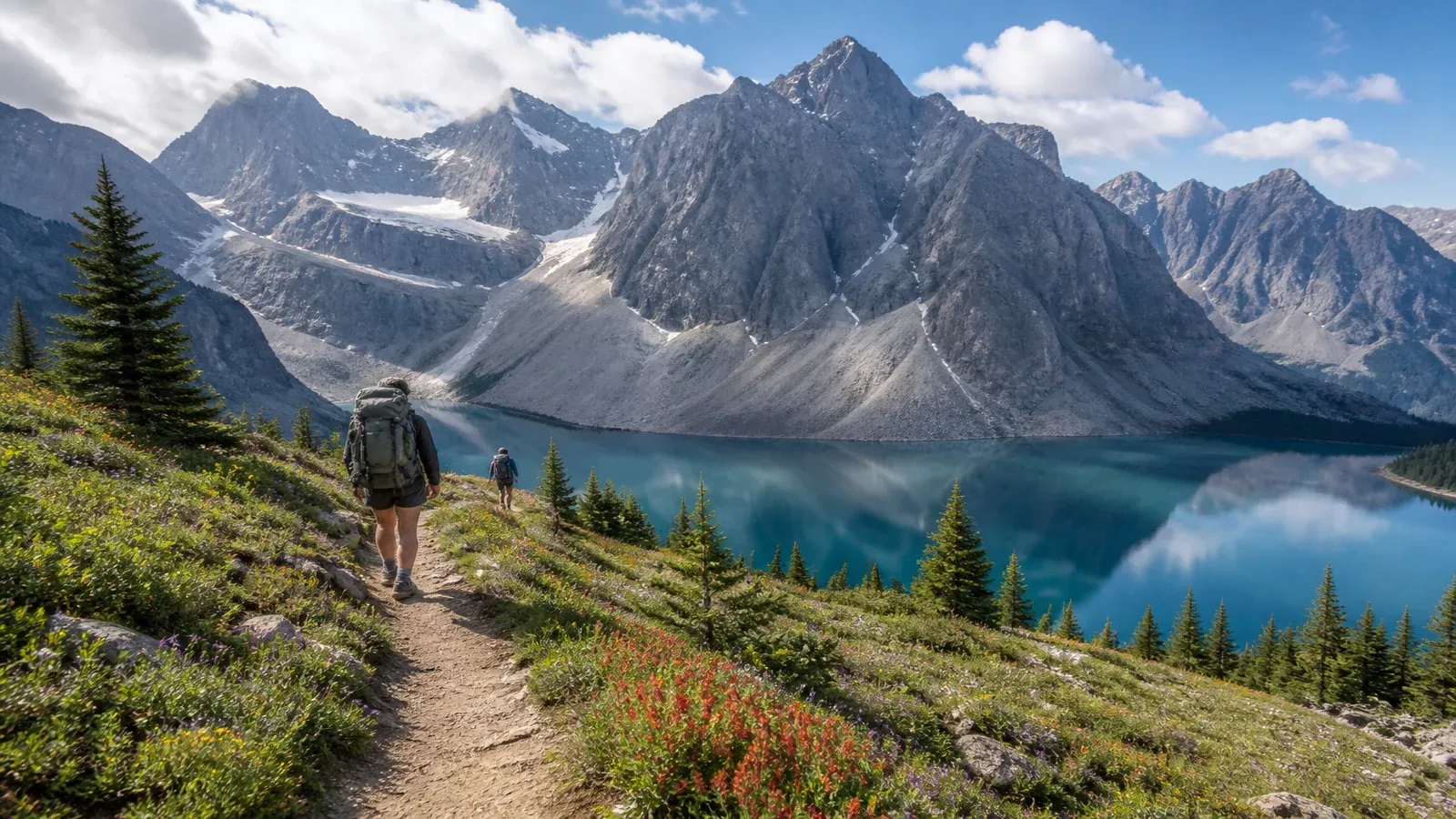
Mountain lakes often sit at the intersection of accessible shoreline trails and more demanding alpine routes that climb into surrounding peaks and passes. For travelers based at a lakeside cabin or mountain retreat, day hiking frequently becomes the central activity — a way to explore terrain beyond the water's edge while returning each evening to the same base. This guide covers how to evaluate trails near mountain lakes, plan hikes appropriate to your group's fitness and acclimatization, prepare for elevation and weather variability, and practice leave-no-trace principles in sensitive high-country environments.
Types of Trails Near Mountain Lakes
Trail networks around alpine lakes typically include several distinct categories, each suited to different experience levels and time commitments:
- Shoreline and nature paths: Generally low elevation gain, often under two miles, suitable for families or recovery days after longer hikes. Surface may be boardwalk, compacted gravel, or natural tread near marshy areas.
- Forest and valley routes: Moderate trails following streams into adjacent valleys, with gradual gain and shaded cover. Often provide access to waterfalls, meadows, and secondary lakes.
- Alpine day hikes: Steeper routes climbing to viewpoints, ridgelines, or passes above treeline. Exposure to weather increases significantly above roughly 11,000 feet (3,350 meters) in many ranges.
- Long-distance and thru-trail segments: Some popular lakes connect to national scenic trails or extended backcountry routes requiring overnight permits and backpacking equipment beyond the scope of a typical cabin stay.
Official trail maps from the administering agency — National Park Service, U.S. Forest Service, or state parks — remain the most reliable sources for current distances, elevation profiles, and closure information.
Planning Day Hikes from a Cabin Base
Using a fixed lodging base simplifies daily hike planning compared to moving campsites each night. A practical framework:
- Select trails whose total distance and elevation gain match the group's least-fit member on the first day, increasing difficulty gradually as acclimatization improves.
- Identify turnaround times based on sunset and weather forecasts, not just distance — alpine storms often arrive earlier than lowland forecasts suggest.
- Confirm whether trailheads require driving from the cabin and whether parking fills early during peak season.
- Check permit requirements for popular destinations; some lakes and surrounding trails use quota systems during summer months.
- Pack layers, rain protection, food, water filtration or sufficient carry capacity, navigation tools, and a first-aid kit appropriate to remoteness.
Our trip planning guide integrates hiking into broader itinerary sequencing for mountain lake trips.
Elevation, Acclimatization, and Pace
Hiking at elevation stresses cardiovascular systems differently than the same mileage at sea level. A trail rated moderate at 5,000 feet may feel strenuous at 9,000 feet for visitors arriving from low elevation. Allowing a rest day near the lake before attempting the most ambitious hike often improves comfort and reduces altitude-related symptoms.
Pacing strategies that work well at altitude include starting slower than feels necessary, taking frequent short breaks rather than few long ones, eating steady small snacks, and turning back without hesitation if headaches, nausea, or coordination issues develop — these can indicate altitude illness requiring descent.
Wildlife on Mountain Trails
Trails near lakes intersect habitat for deer, elk, black bears, mountain goats, and various smaller mammals and birds. General guidance:
- Make noise in bear country, especially near streams and berry patches, to avoid surprising animals at close range.
- Store food in bear-resistant containers or vehicles according to local requirements — never leave packs unattended with food accessible.
- Maintain distance from all wildlife; use binoculars rather than approaching for photographs.
- Know species-specific responses: moose can be defensive near water; mountain goats may approach seeking salt from gear.
Detailed species and distance guidance appears in our wildlife guide.
Weather and Terrain Hazards
Afternoon lightning is a serious concern on exposed ridges and above treeline during summer months in most mountain ranges. Planning to reach summits or open areas before noon and descending before storm buildup is a widely recommended practice. Snowfields may persist on shaded north-facing slopes into July on high trails — traction devices and trekking poles improve safety on steep snow patches.
Stream crossings swell rapidly during afternoon snowmelt and after thunderstorms. Assessing depth and current before crossing, and turning back when uncertain, prevents a common source of backcountry incidents.
Leave No Trace at Mountain Lakes
Alpine and subalpine ecosystems recover slowly from damage. Key practices for lake-area hiking include:
- Stay on established trails and durable surfaces; shortcutting switchbacks causes erosion visible for years.
- Pack out all trash, including fruit peels and biodegradable items that decompose slowly at altitude.
- Dispose of human waste according to local guidance — some areas require packing out waste or using designated facilities at trailheads.
- Camp and rest at least 200 feet from lakeshores and streams to protect water quality and wildlife habitat where backcountry camping applies.
- Leave wildflowers, rocks, and cultural artifacts undisturbed.
The most memorable hikes from a mountain lake base are usually the ones planned with enough margin to turn back safely — summit fever causes more problems than insufficient ambition.
How This Guide Was Put Together
This overview reflects general backcountry hiking guidance from land management agencies and established leave-no-trace education programs, adapted for travelers using lakeside cabins as a hiking base. Trail conditions, closures, and permit rules change seasonally — verify all details with official sources before each hike. fluoboritoid provides educational travel information and does not operate guided hiking services or guarantee trail accessibility.