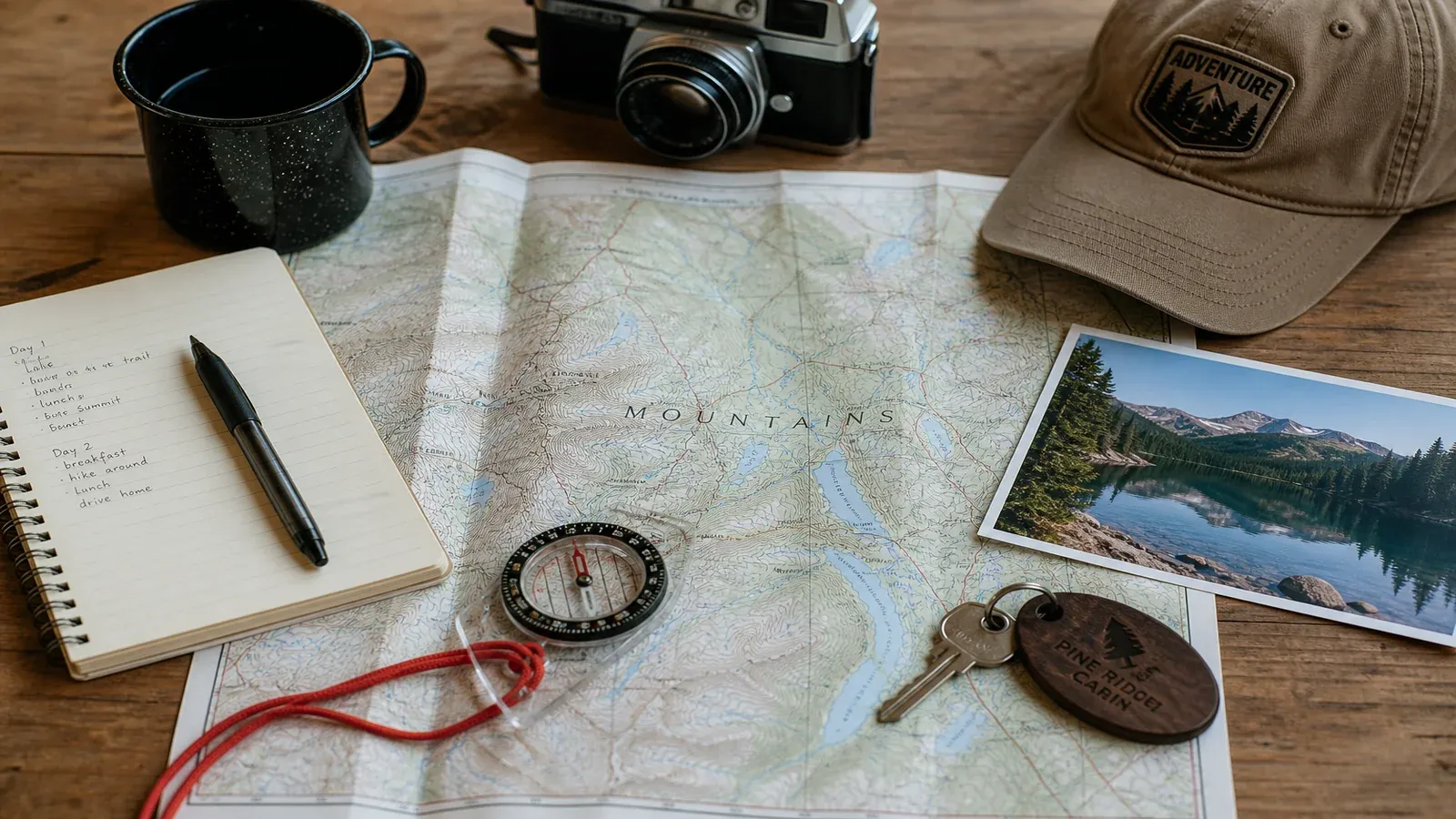
Planning a mountain lakeside cabin trip rewards sequencing: clarifying priorities before browsing properties, researching regions before committing to dates, and confirming logistics before packing. Unlike urban hotel stays, lake cabin trips intertwine lodging with access roads, water conditions, seasonal closures, and activity-specific regulations in ways that reward advance preparation. This guide presents a general planning framework — from initial idea to departure day — that travelers can adapt to weekend escapes or week-long stays. It connects to the more detailed activity and seasonal guides elsewhere on fluoboritoid.com without substituting for direct confirmation with property hosts and official local authorities.
Step 1: Define Trip Priorities
Before researching specific lakes or cabins, articulating a few core preferences narrows the field substantially:
- Primary purpose: Rest, hiking, fishing, paddling, photography, family time, or a balanced mix — see our guides to hiking, fishing, and scenic views for activity depth.
- Structure type: True lakeside cabin versus nearby mountain retreat — compare our lakeside cabins and mountain retreats guides.
- Comfort level: Rustic off-grid versus climate-controlled amenities affects season flexibility and packing.
- Group needs: Access requirements, pet policies, child-safe shoreline features, and sleeping capacity constraints.
- Trip length: Weekend versus extended stay — our weekend escapes guide addresses short-trip pacing specifically.
Step 2: Choose Region and Season Together
Region and timing interact inseparably at mountain lakes. A destination perfect for July hiking may lack road access in April; an autumn foliage goal requires elevation-specific peak tracking. Our seasonal guides describe broad month-by-month patterns; applying them to a specific target lake requires checking historical road opening dates, average snowpack, and property operating calendars.
Shoulder-season travel often balances weather acceptability with reduced crowds, particularly at lakes that become heavily visited during midsummer holidays.
Step 3: Research and Compare Properties
With region and season defined, property research focuses on logistics that listing photos may not reveal:
- Exact shoreline access type — private, shared, or view-only from elevation.
- Heating, insulation, and water system suitability for your travel dates.
- Access road requirements including four-wheel-drive, chains, or seasonal closures.
- Distance and drive time to nearest groceries, fuel, medical care, and cell coverage.
- Cancellation and weather contingency policies.
- Included versus extra-cost amenities such as dock use, firewood, or boat slips.
Cross-referencing information from multiple sources — listing descriptions, property host responses, official maps, and recent traveler comments where available — reduces surprises upon arrival.
Step 4: Build a Realistic Timeline
A general planning timeline adaptable to most mountain lake trips:
- 2–3 months before departure: Book popular properties for peak summer or holiday weekends; begin permit research for constrained trailheads or fishing licenses if traveling out of state.
- 4–6 weeks before: Finalize activity plans at a high level; arrange gear purchases or rentals; confirm property details in writing with the host.
- 1–2 weeks before: Monitor weather trends and any active fire, flood, or road advisories for the region; compile packing lists; download offline maps where cell service is uncertain.
- 2–3 days before: Check detailed forecasts; shop for groceries if remote access limits provisioning; share itinerary with someone not on the trip.
- Day before departure: Verify road status if spring or late autumn travel; pack layers and rain gear regardless of optimistic forecasts; charge devices and portable batteries.
Step 5: Pack and Prepare for Mountain Conditions
Core packing categories for lakeside cabin trips include layered clothing, rain protection, sturdy footwear broken in before the trip, sun protection intensified by altitude, insect repellent during peak seasons, personal medications in sufficient quantity given remote pharmacy access, navigation tools, headlamp, and basic first-aid supplies. Activity-specific gear for fishing, paddling, or hiking should align with guides dedicated to those topics rather than overpacked just-in-case equipment lists.
Food planning depends on kitchen equipment at the property and distance to stores — confirming cookware, spice availability, and coffee-making tools prevents minor frustrations from dominating early arrival hours.
Step 6: Plan for Weather and Contingencies
Mountain weather can disrupt outdoor plans without ruining a trip if flexibility exists. Useful contingency approaches include:
- Scheduling the highest-priority outdoor activity for the first full day with backup indoor or low-effort options reserved.
- Bringing books, simple games, or craft supplies for rain afternoons.
- Knowing property refund or credit policies before weather forces cancellation.
- Identifying one alternate trail or lake activity reachable if primary plans become unsafe due to lightning, smoke, or high water.
A workable trip plan accounts for the decisions that are hard to reverse — property, season, and access — while leaving daily activity details flexible enough for mountain weather reality.
Step 7: On-Site Orientation
First hours at a lakeside cabin ideally include a brief orientation: locating trash and recycling rules, food storage containers, water shutoffs, heating controls, emergency contact numbers, and the safest path to the shoreline. Testing cell service from the property clarifies communication options. A short walk to the water in daylight prevents missteps on unfamiliar terrain after dark.
Request a Trip-Planning Checklist
Travelers who want a structured starting point can visit our homepage contact section to request a general trip-planning checklist oriented toward mountain lakeside travel. This is an educational resource, not a booking service — fluoboritoid does not manage reservations or represent specific properties — but it can help organize research using the framework above.
How This Guide Was Put Together
This planning framework reflects general travel preparation practices adapted for mountain lake cabin contexts, informed by the specialized guides published across fluoboritoid.com. It is intended as an organizing tool rather than a guarantee of availability, pricing, or conditions at any destination. Always confirm current details with property operators, state wildlife and parks agencies, and local authorities before finalizing plans.